How to remove limescale easily and quickly
|
|
Time to read 5 min
|
|
Time to read 5 min
Limescale is a common phenomenon in bathrooms, forming as calcium and magnesium from water deposit on surfaces. This is known as limescale buildup. While limescale itself is natural and harmless, its accumulation can be an aesthetic and functional problem in bathroom spaces. This article discusses the causes of limescale formation, its effects in the bathroom, and effective ways to prevent and remove it.
Contents
Limescale deposits are caused by hard water, which contains high levels of minerals such as calcium and magnesium. When hard water evaporates from bathroom surfaces, these minerals are left behind, forming white or yellowish layers.
Speed: Limescale accumulation depends on water hardness and how often the bathroom is used.
Limescale deposits can have both aesthetic and practical disadvantages:
1. Appearance: White or yellowish marks make bathroom surfaces look dull and neglected.
2. Functional problems:
3. Moisture problems: Limescale easily collects dirt and soap residue, which can promote the growth of bacteria and mold.
Limescale removal requires regular maintenance and the use of appropriate cleaning agents. Here are some effective ways to remove limescale deposits:
Several limescale removal products are available on the market, specifically designed for bathrooms. These are particularly useful for hardened deposits.
For example, Whitelime from the Befree Home product range effectively removes limescale from all surfaces while cleaning them without damage. The product contains anionic surfactants and a fragrance, providing a pleasant scent.
Befree Whitelime is completely free of phosphates, metals, allergens, and animal-derived ingredients. The product is therefore based entirely on natural substances and is safe for the whole family and the environment.
Befree Whitelime has been awarded the EU Ecolabel.
In addition to a good cleaning agent, limescale also requires mechanical cleaning, for which good options include:
While limescale deposits are inevitable when using hard water, their formation can be slowed down by:
1. Regular cleaning:
2. Use water-repellent products:
3. Install a water softener:
4. Regular maintenance:
Limescale in the bathroom is a common but manageable problem.
With regular cleaning and preventative measures, you can keep your bathroom fresh and beautiful for longer.
Vinegar, baking soda, and lemon are natural and eco-friendly options for limescale removal, but for particularly stubborn situations, commercial descalers should be used.
Water softeners and wiping away water droplets are effective ways to prevent limescale formation and keep the bathroom clean in the long term.
• Handling delicate surfaces: Limescale can adhere particularly stubbornly to porous surfaces, such as marble. These surfaces should not be treated with acidic substances, such as vinegar, as they can damage the surface.
• Metal parts: Faucets and shower heads made of chrome or other shiny metals can be scratched by excessive scrubbing.
Author: Amanda Harju
Hi! I'm Amanda and I'm one of the founders of Puhtoinen. Domesticity, ecology and ethics are close to my heart.
Products from the post:
Limescale forms when calcium and magnesium minerals in hard water are left on surfaces as the water evaporates. This is particularly common in bathrooms and kitchens, where surfaces are frequently in contact with water.
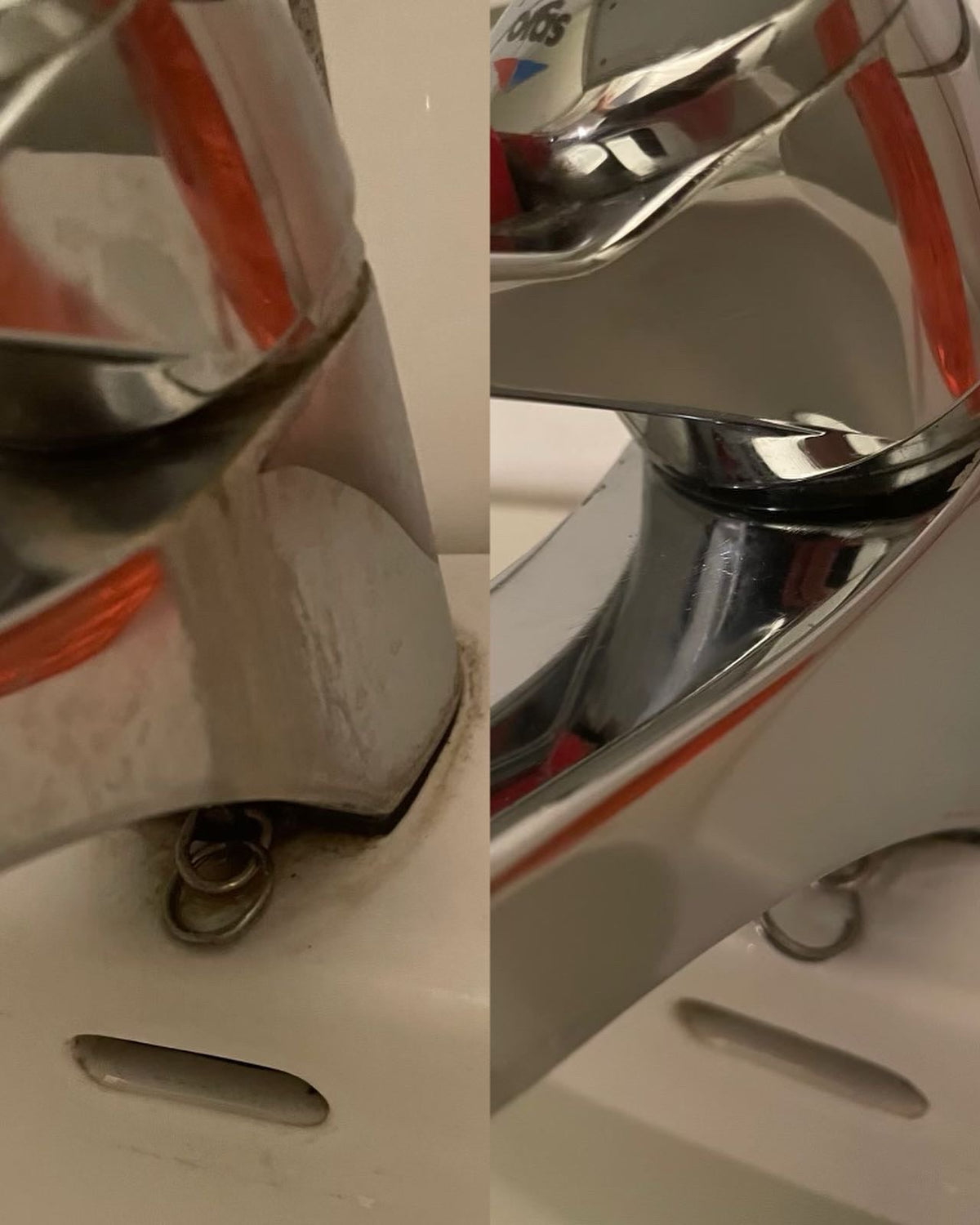
Limescale deposits appear as white, grayish, or yellowish stains or layers. They are especially common on faucets, showerheads, glass surfaces, tiles, and sinks.
Limescale deposits can be removed using several methods:
• Natural alternatives: Vinegar, lemon juice, and baking soda.
• Commercial descalers: These are especially recommended for stubborn deposits. A great descaling spray from our selection: Befree - Whitelime Descaler
Not all surfaces can withstand acidic substances, such as vinegar or lemon juice. Especially marble, limestone, and other porous natural stone surfaces can be damaged. For these surfaces, gentle, acid-free products are recommended. For example, Befree - Whitelime Descaler is suitable for all surfaces without damaging them.
The methods are mostly the same, but in the bathroom, limescale more often accumulates on showerheads and tiles, while in the kitchen, it appears on dishes, faucets, and coffee makers. Use appropriate products for each surface.
No, limescale itself is not dangerous for health. It is a natural mineral. However, its accumulation can attract dirt and bacteria, which can be a hygienic problem.
• Use a soft brush, such as a toothbrush, or try a pumice stone for hard-to-reach areas.
• If the limescale layer is very thick, let the cleaning agent act longer.


